

Open Parallel Ltd. and Conference Director, Multicore World, New Zealand
“Agriculture Empowered by Supercomputing -Annual Report 2”
Abstract
Concerns over climate change and sustainable agriculture have made nation-wide high resolution environment monitoring and modelling desirable. Recent developments in technology have made it affordable. An environment modelling network is a supercomputer, but not of a familiar kind. Conventional supercomputing approaches are appropriate for the modelling aspect, but not the monitoring aspect. While sensor networks are familiar in the Internet of Things (IoT), geographically remote sensors without access to mains power have harsher resource constraints than, say, internet-ready light bulbs. A “two-realm” approach to system software is needed.
This talk will summarise the Listen to the Land (Whakarongo ki te whenua) project, update its progress in the past year and propose a set of questions to discuss with the audience (Q&A plus un-conference day) .
Bio
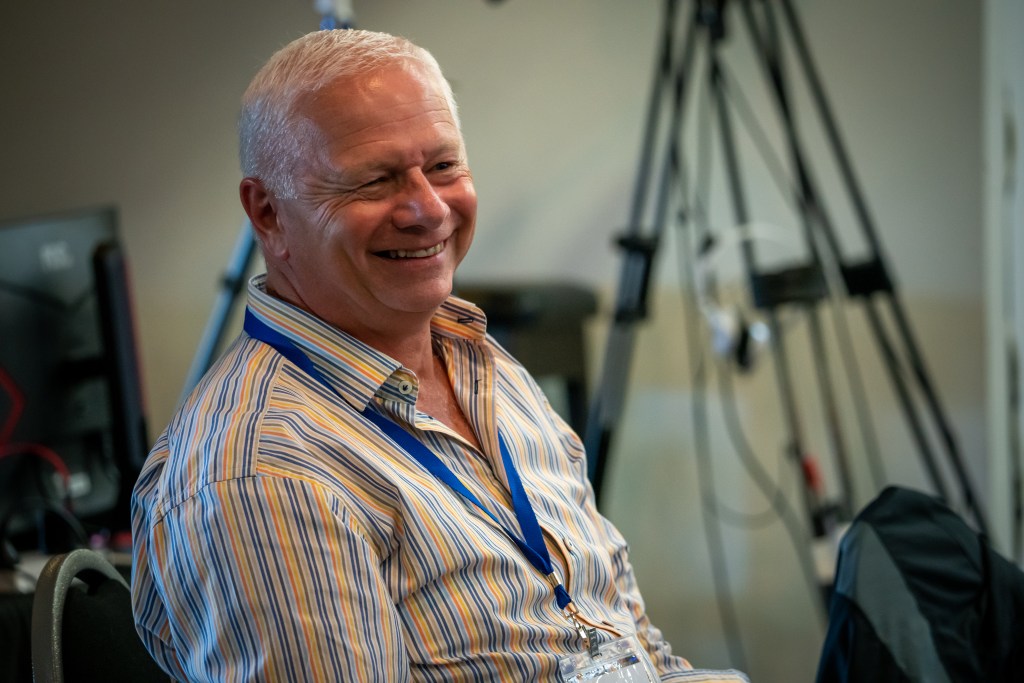
Nicolás Erdödy founded Open Parallel in 2010 as a strategy and technology consultancy, specialized in next-gen high-tech ecosystems. A globally distributed company, Open Parallel was the only company officially selected by the New Zealand Government in 2012 to contribute to the computing platform of the Square Kilometre Array radio telescope project (SKA) – the largest civil scientific and engineering instrument in the world. He was a prime author of the two SKA Memos that address security for HPC systems: “Considerations for the Science Data Processor (SDP) Operating System” and “Security for the SDP Architecture Considerations”.
Core knowledge developed for the SKA is behind Open Parallel’s decadal project Whakarongo ki te Whenua (Listen to the Land) – a massive platform concept for NZ’s Agritech and primary sector. At SC23, Nicolás led the 1st BoF session “Agriculture Empowered by Supercomputing”.
Nicolás is the Conference Director of the Multicore World conference series since 2011. He holds a Master of Entrepreneurship from the School of Business of University of Otago, New Zealand and studied Hydraulics (and Fortran) at the School of Engineering of Universidad de la República, Montevideo, Uruguay.
Slides
 multicore.world