
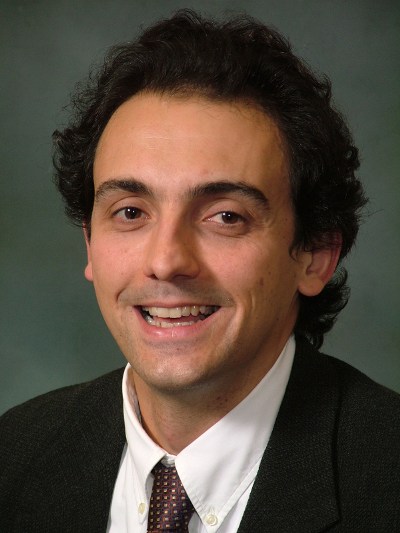
Professor of Computer Science; Chair, Department of Computer Science. Columbia University. US.
“Designing Sustainable AI Systems through Agile and Collaborative Hardware Platforms“
Tuesday 17 February 2026
Abstract
Semiconductors made AI possible, and AI will continue to advance at the speed of hardware. In the era of sustainable AI, future systems must integrate diverse computing resources under increasingly strict constraints on energy, area, and design complexity, with chiplet-based assembly in advanced packages emerging as a key enabler. Meeting these demands requires new computing platforms built on modular abstractions, such as a tile-based organization, enabling agility, reuse, and collaboration at scale.
The talk presents ESP, an open-source SoC platform developed to support rapid integration of heterogeneous components, including specialized accelerators, within a tile-based architectural framework. Its capabilities are illustrated through a heterogeneous SoC implemented in a 12 nm process and running Linux-SMP. Building on this experience, the talk distills broader lessons on how open, agile platforms can accelerate research, promote design reuse and shared infrastructure, and support a collaborative approach to sustainable AI.
Bio
Luca Carloni is professor and chair of Computer Science at Columbia University in the City of New York. He holds a Laurea Degree Summa cum Laude in Electronics Engineering from the University of Bologna, Italy, and an MS in Engineering and
a PhD in Electrical Engineering and Computer Sciences, both from the University of California, Berkeley. His research interests include heterogeneous computing, system-on-chip platforms, embedded systems, and open-source hardware. He
co-authored over two hundred refereed papers.
Luca received the NSF CAREER Award, the Alfred P. Sloan Research Fellowship, and the ONR Young Investigator Award. In 2025, he received the IEEE/ACM A. Richard Newton Technical Impact Award in Electronic Design Automation for the paper
“Latency-Insensitive Protocols” and the Columbia Engineering School (SEAS) Alumni Distinguished Faculty Teaching Award. He is an IEEE Fellow.
MW26 Videos
MW26 Q & A
 multicore.world