
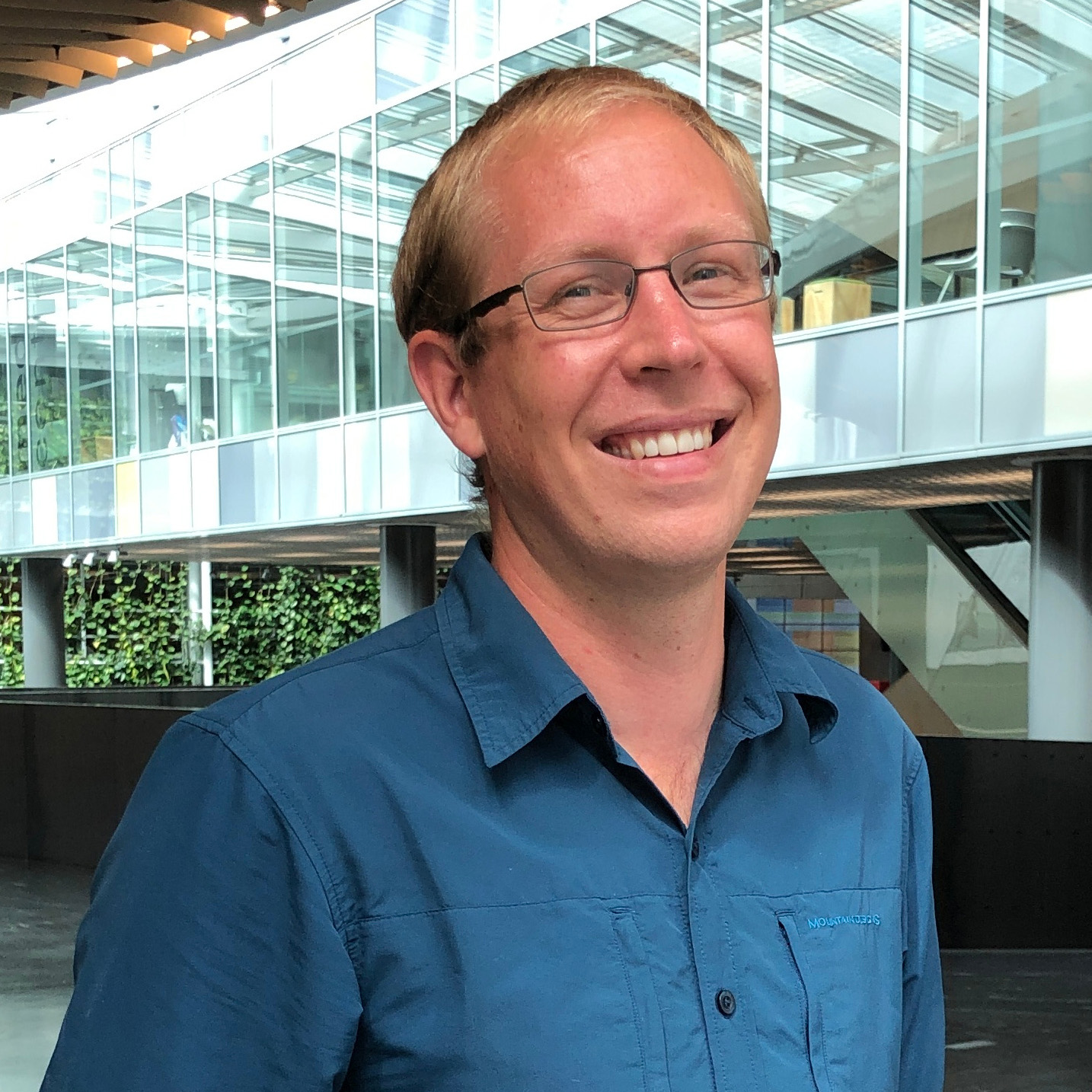
Consulting HPC, FPGA Engineer – SKA Central Signal Processors (Canada). Director, Kamputed Ltd. Hamilton, New Zealand.
“The Square Kilometre Array is Alive!“
Tuesday 17 February 2026
Abstract
It’s been a big year for the SKA, 2025 has seen receptors emerging from the desert terrains, pointing skyward to collect the faintest of signals from the galactic plane. Feeding the hungry correlators that masticate the data into visibilities for the science data pipeline to digest.
For the Mid Correlator team it has been a year of testing, verification, bug fixing, testing, verification, …, factory acceptance test completion, deployment, and integration with the other components of the telescope. Culminating in the {embargoed news}. 2026 will see the deployment of an eight receptor Mid Telescope.
Meanwhile the FPGA team has started work on a new technology platform, replacing the custom Stratix10 FPGA boards and passive optical fibre interconnect, with a more data-centre like configuration with Agilex7 PCIe cards with HBM in x86 servers, interconnected with 400GbE switches. With this new architecture and upgraded technology the correlator is shrunk to half the space, and half the power.
The AXIoE (Advanced eXtensible Interconnect over Ethernet) I developed for the SKA correlator, and published is also making its way into 6G cellular base stations and quantum computers. The world is building larger multi-FPGA systems and need a way to control and coordinate these over a reliable networked connection. This demonstrates the value of being involved in the development of mega-science projects such as the SKA that push on the boundaries of what is possible.
Bio
William is a computer engineer who is occasionally tempted into the academic world. His area of work and interest is in high performance computing using FPGA (Field Programmable Gate Array).
He likes to challenge the conventional assumptions in computing to build higher performance machines that consume less power. FPGA technologies provide him the latitude to explore digital computing with non-von-Neumann architectures.
Will has a Ph.D from the University of Canterbury (NZ) where he researched redundant number systems, their implementation in FPGA, and applications. A redundant number system is one where there are multiple ways of representing some (or all) numbers. These different representations can be exploited to achieve increases in performance, and decreases in power, but come with additional hardware costs.
Will is currently the Lead FPGA engineer for the SKA Mid-frequency Correlator and Beamfomer (SKA.Mid.CBF) Team that has been assembled by the Canadian National Research Council and primary contractor MDA. Will has been involved full time with the SKA project since 2015 and is now consulting through his company Kamputed, working from Hamilton, New Zealand.
MW26 Videos
MW26 Q & A
 multicore.world