
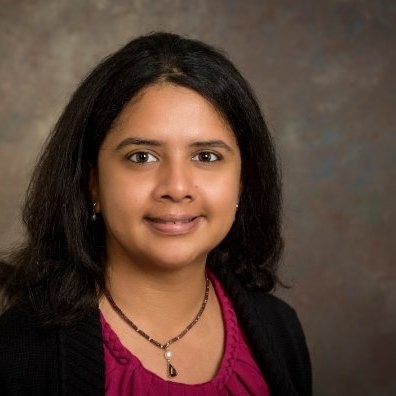
Co-Director, AI Center of Excellence. University of Delaware. US.
“The Artificial Scientist – Leveraging In-transit Machine Learning for Plasma Simulations“
19 February 2025
Abstract
With the rapid advancements in the computer architecture space, the migration of legacy applications to new architectures remains a continuous challenge. To effectively navigate this ever-evolving hardware landscape, software and toolchains must evolve in tandem, staying ahead of the curve in terms of architectural innovation. While this synchronization between hardware and software is inherently complex, it is essential for fully harnessing the potential of advanced hardware platforms. In this context, a marriage between HPC and AI is gaining increasing prominence. By effectively orchestrating the workflow of HPC and AI, we can not only accelerate scientific progress but also achieve significant gains in computational efficiency. One promising strategy to further optimize large-scale workflows is to stream simulation data directly into machine learning (ML) frameworks. This approach bypasses traditional file system bottlenecks, allowing for the transformation of data in transit— asynchronously with both the simulation process and model training.
This talk will explore these strategies in detail, demonstrating the synergy between hardware innovation and software adaptation. Using real-world scientific applications as case study, Plasma-in-Cell on GPU, i.e. PIConGPU we will showcase how these techniques can be applied at scale to drive both scientific and computational advancements.
Bio
Sunita Chandrasekaran is an Associate Professor with the Department of Computer and Information Sciences at the University of Delaware, USA. She is also a co-director of the AI Center of Excellence at UD. She received her Ph.D. on Tools and Algorithms for High-Level Algorithm Mapping to FPGAs from the Nanyang Technological University (NTU), Singapore. Her research spans high performance computing, exascale computing, parallel programming, compilers, benchmarking, machine learning and interdisciplinary science.
Her projects includes the post exascale project on Sustainability for Programming Systems and Tools, ORNL’s CAAR scaling PIConGPU on supercomputers enabling newer science, building validation and verification testsuite projects while exploring using LLMs for the same, accelerating solar and bio physics applications, and using ML/AI for drug discovery.
She serves on the board of directors of the OpenACC organization and is also the user representative chair for OpenACC. She is a member of the DOE Advanced Scientific Computing Advisory Committee (ASCAC) committee and the Vice Chair for the State of Delaware AI commission. She has held various leadership positions in HPC conferences and workshops over the past several years.
 multicore.world